
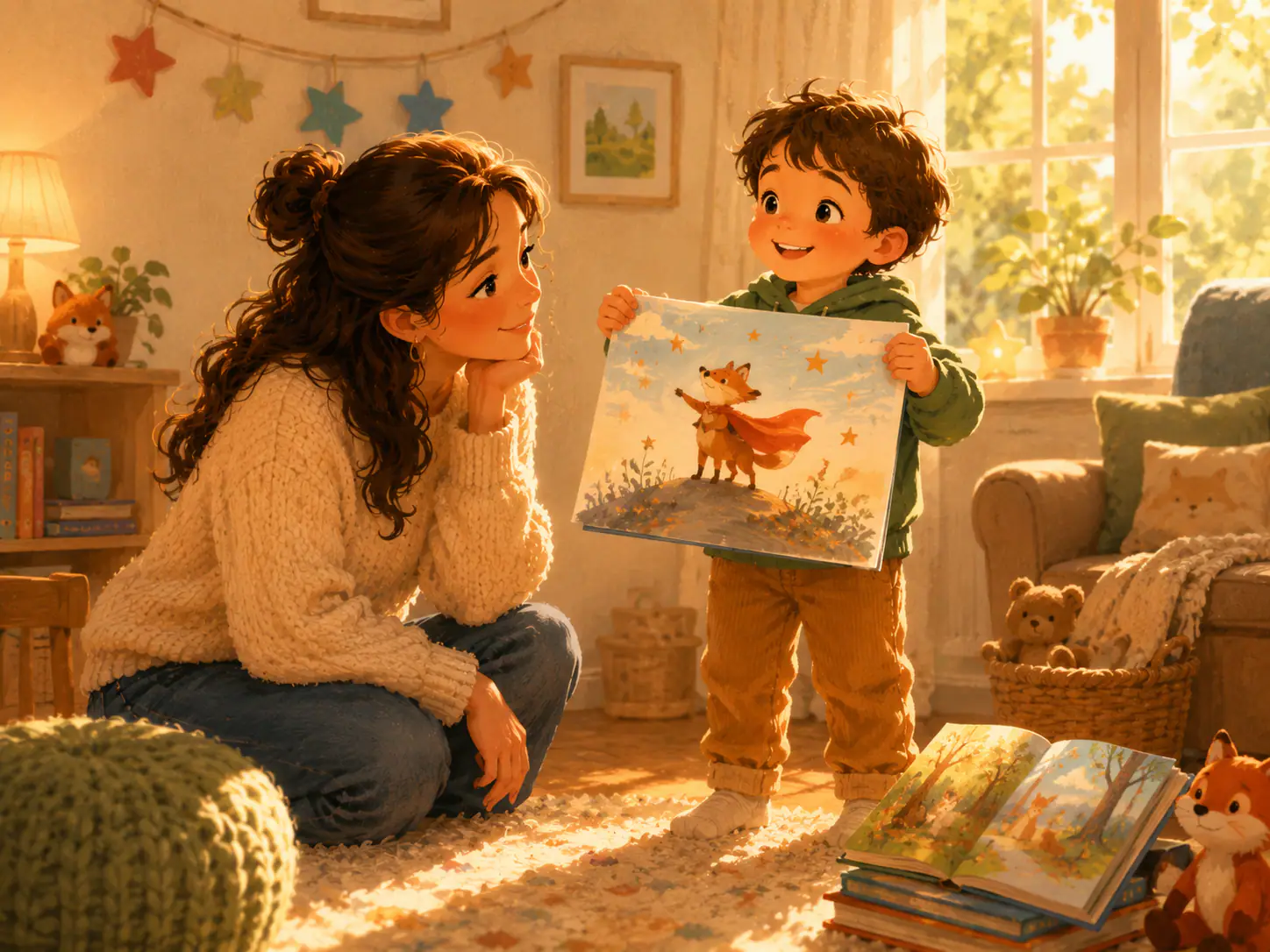
Start with the child, not only the age label
Age ranges are useful, but children of the same age can want very different things from a book. One may love a long, detailed story; another may prefer a simple plot with pictures that invite lots of conversation. Think about what holds this child’s attention now: humour, animals, machines, mysteries, bedtime calm, strong feelings, repetition or a particular kind of artwork.
Let the pictures carry part of the story
A strong picture book should not need the words to explain everything the images already show. Look for illustrations that add clues, expressions, small side stories and details worth noticing on a second reading. When pictures do some of the storytelling, children can participate even before they can read the text themselves.
Read a page aloud before you choose
Picture books are often experienced through an adult voice, so rhythm matters. Try a page or two aloud. Does the language feel natural? Are the sentences easy to follow? Is there enough variation to keep the ear interested without making every page feel crowded? A book that sounds good aloud is easier to share repeatedly.
Choose an emotional fit, not just a lesson
Books about courage, jealousy, separation, friendship or mistakes can be useful, but a story works best when it is still a story rather than a lecture. Look for characters who make choices, feel consequences and discover something through the plot. The meaning should grow from what happens, not arrive as a speech at the end.
Look for reasons to return to the book
The best value is often not a book that is read once quickly, but one that keeps offering something new. A child may return for a favourite phrase, a hidden visual detail, a familiar emotional moment or simply the comfort of knowing what happens next. Re-readability is one of the strongest signs that a picture book belongs on the family shelf.
A simple five-question check
Before buying or borrowing, ask: Will this child care about what happens? Do the pictures reward close looking? Does the language work aloud? Is the emotional tone right for this moment? Would we willingly read it again next week? A book does not need to answer every question perfectly, but these five checks usually reveal more than an age label alone.