
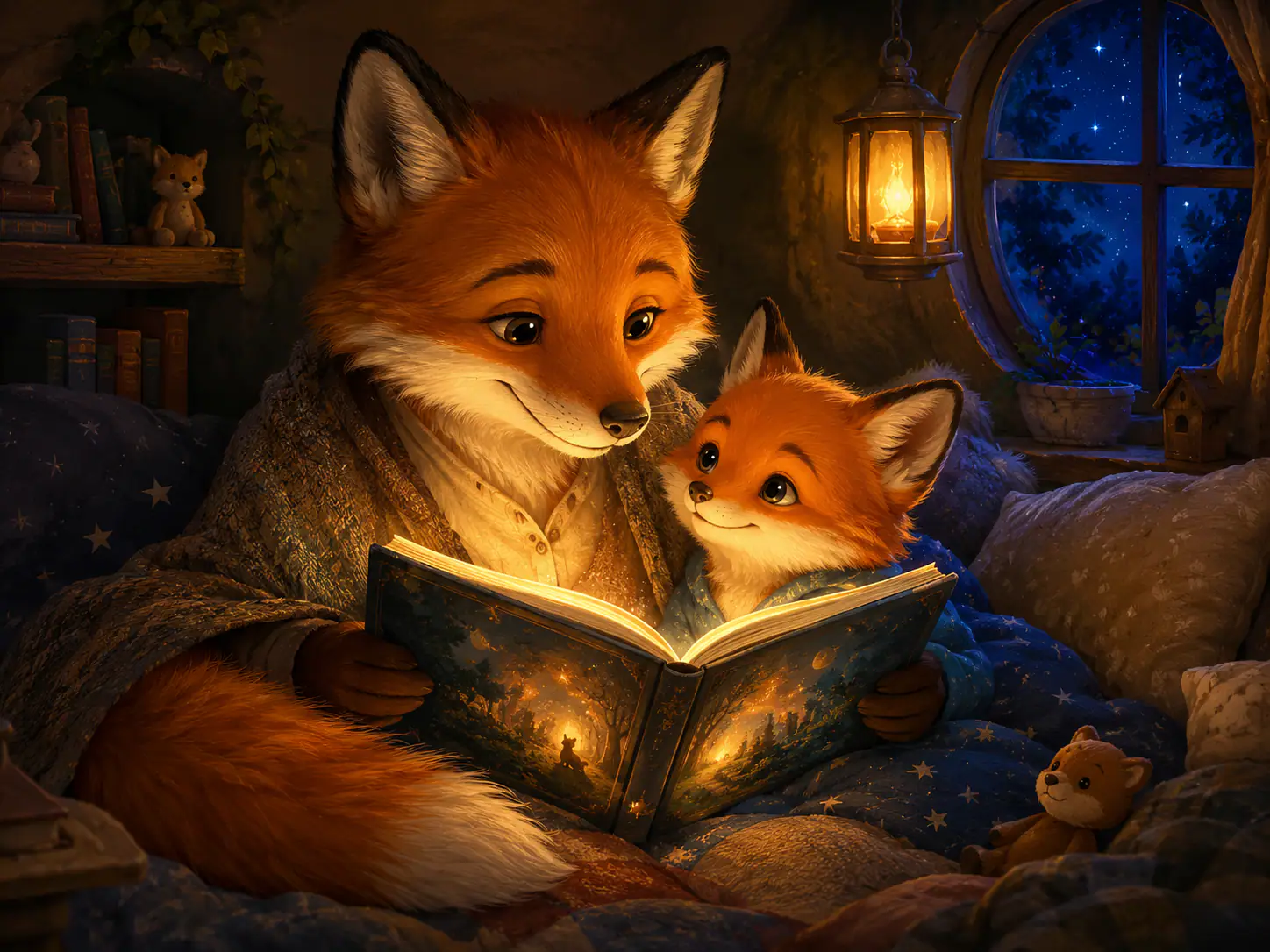
A family book has more than one reader
Picture books are often bought for children but experienced by two people at once. The child follows the characters, pictures and emotional movement; the adult gives the words a voice and often returns to the same story many times. A strong family picture book respects both sides of that experience instead of treating the grown-up as a delivery system for the text.
Repetition is easier when the language has rhythm
Children frequently ask for the same book again, which means the sentences need to survive repetition. Natural phrasing, well-placed pauses, a little humour and language that feels good to say aloud can make the tenth reading more pleasant than the first. The goal is not clever writing for adults; it is writing with enough craft that repeated reading still feels alive.
Illustrations can offer different discoveries at different ages
A younger child may notice a glowing object, an animal or a funny expression. An adult may notice composition, visual echoes, background clues or a quiet emotional shift. When pictures contain more than the text explains, both readers have reasons to look again. That layered quality helps a book stay interesting as the child grows.
Choose books you are genuinely willing to revisit
The best family library is not built only from lists of what children are supposed to read. Ask whether the story invites conversation, whether the art rewards a second look and whether you can imagine reading it again tomorrow without wishing to skip half the pages. A book that both child and adult enjoy is more likely to become part of family life rather than simply remain on the shelf.