
A glowing garden gate among blue flowers at dusk

Marty Talefox journal

How Picture Books Help Children Talk About Big Feelings

Why illustrated stories can make feelings easier to notice, name and discuss together.

Stories give feelings a shape

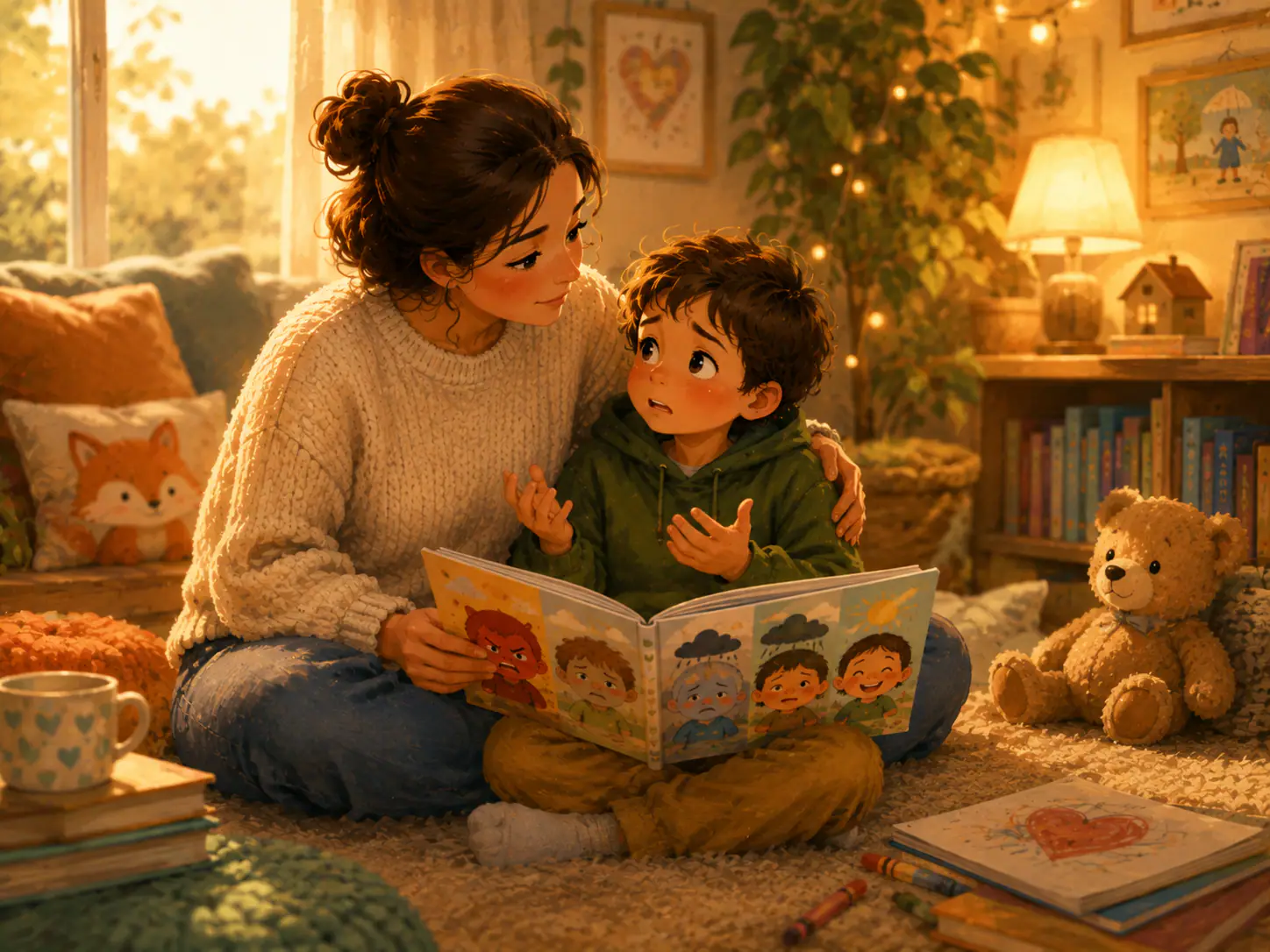
Young children often recognise a feeling in a character before they can explain it in themselves. A worried face, a quiet pause, or a brave small choice gives a family a gentle place to begin talking.

Pictures invite close looking

Illustrations hold details that children can return to. Ask what a character might be noticing, feeling, or needing; there does not need to be one correct answer.

A new world is quietly growing

The image above is a small glimpse of a future Marty Talefox storyworld. Its details are still a secret, but it is being made for close looking and shared reading.

Name a feeling without rushing to fix it

A picture book can create a little distance between a child and a difficult emotion. Instead of asking, “Are you angry too?”, begin with the character: What does the face, body or setting suggest? Naming worried, disappointed, jealous, proud or overwhelmed expands emotional vocabulary without forcing a personal disclosure. The child can connect the story to real life when — and if — they are ready.

Build a wider feelings vocabulary

Young children often rely on a few broad words such as happy, sad and angry. Illustrations make room for more precise language: nervous can feel different from scared; frustrated is not the same as furious; lonely is not simply sad. The goal is not perfect labels. It is to give a child several possible words and let them choose which one fits the moment best.

A related storyworld

Lumari and the Garden of Sleeping Lights

Continue reading

Gentle Bedtime Stories: What Helps a Child Wind Down?

Children’s Books About Courage Without Being Fearless

More reading ideas