
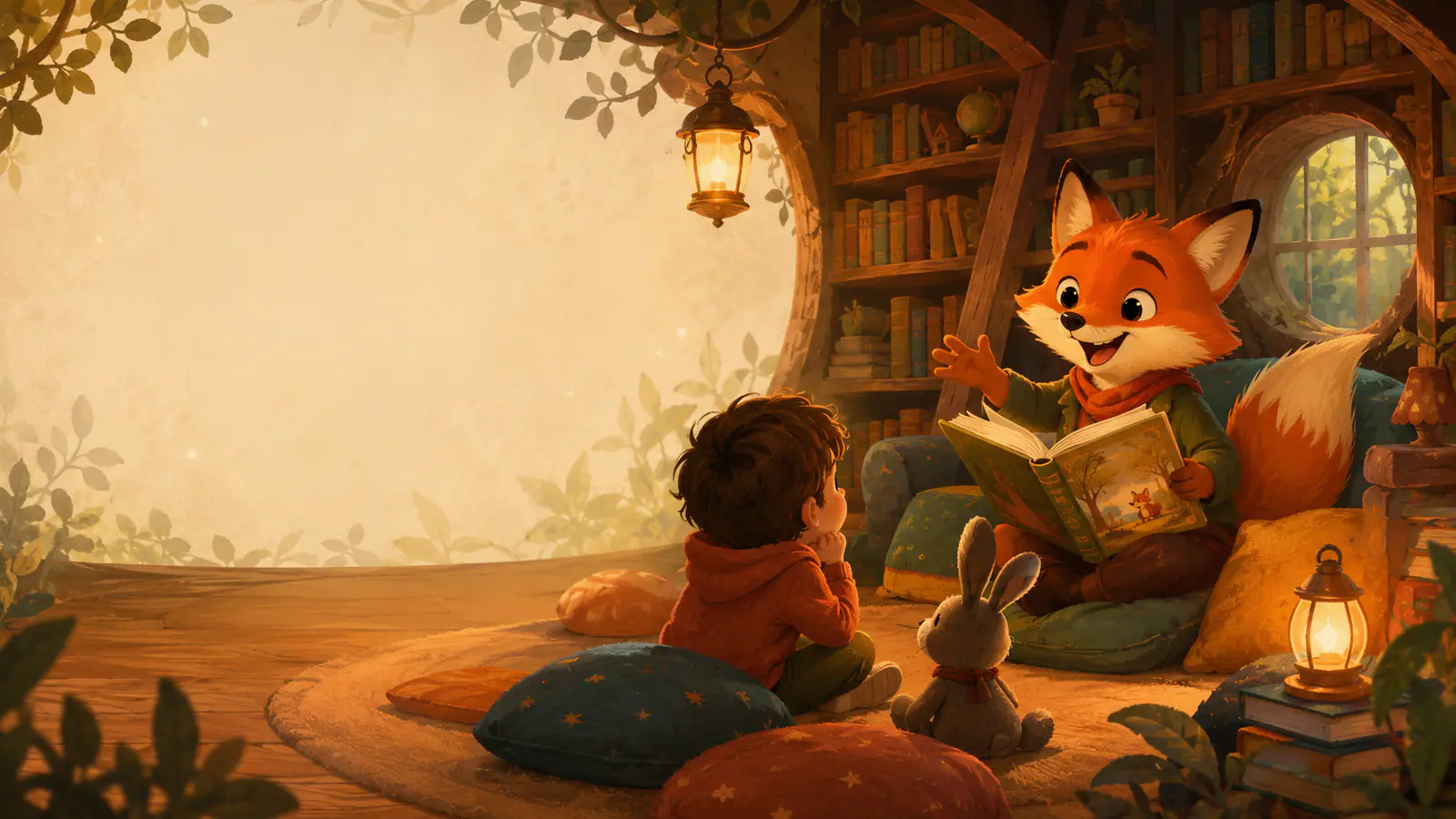
A picture book can change the pace of a room
Young children live inside a fast stream of movement, questions and new information. A picture book creates a different rhythm. The page stays still long enough to notice a face, a tiny object in the background, a change in colour or a sound suggested by the illustration. Nothing has to be solved. Simply looking together gives attention somewhere gentle to land, which is one reason quiet shared reading can feel different from other parts of the day.
Close looking is already a form of participation
Adults sometimes hurry through pages because they think finishing the story is the goal. For a child, stopping on one illustration may be the most valuable part. Ask what they notice before explaining what the picture means. Follow a repeated colour, find something that moved between pages, or listen for the quietest imagined sound. These small invitations strengthen observation without turning the book into a test or demanding that the child sit perfectly still.
Repetition frees attention for new details
On a first reading, much of a child’s attention goes to discovering what happens. On the third or tenth reading, the plot is familiar and more attention becomes available for language, expressions, visual clues and emotional changes. This is why a favourite book can become calmer over time rather than boring. Familiarity reduces the work of prediction and gives the child space to notice something that was invisible when the ending was still unknown.
Choose stories that reward a second look
Books for slower shared reading do not need to be sleepy or silent. They need illustrations and ideas with enough depth to revisit. Look for pages where the image adds information the text does not repeat, characters whose feelings can be read in posture or expression, and details that connect across the story. The best question may be the simplest one: “What did you notice this time that we did not notice before?”
If your child enjoys slowing down to notice sounds, textures, colours and small details, explore our guide to five senses books for kids for more sensory-rich reading ideas.