
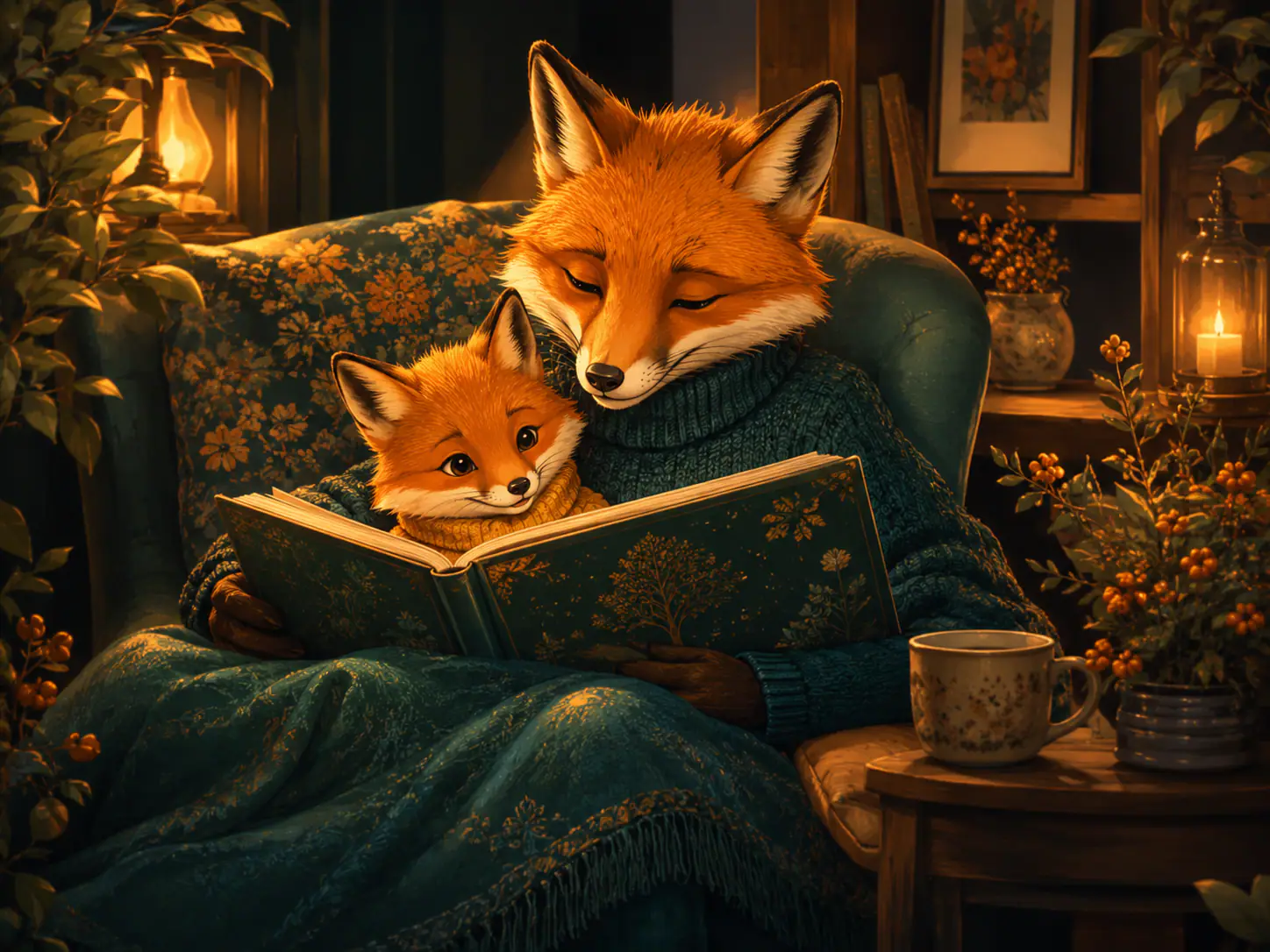
Listening and looking work together
Picture books give young children two ways into the same story: spoken language and visual information. While an adult reads, a child can follow expressions, colour, movement and small details without having to decode every word. That combination makes shared reading especially useful between ages three and seven, when listening comprehension, vocabulary and visual inference are developing at different speeds.
Reading aloud makes room for richer language
A child may understand a sentence that would still be difficult to read independently. When an adult carries the decoding, the child can listen to longer phrases, unfamiliar words, humour and emotional nuance in context. There is no need to stop and explain every new word. Repeated stories and meaningful illustrations often do much of that work naturally.
The shared pause matters as much as the text
Reading aloud is not a race to the final page. A child may want to point at one detail, repeat a favourite line or stay with an illustration for a while. Those pauses are part of the reading experience. They show that books can be places for attention, questions and discovery rather than tasks that have to be completed correctly.
Ages three to seven need different kinds of participation
A three-year-old may join through pointing and repetition; a five-year-old may predict what happens next; a seven-year-old may notice motive or a visual clue the text leaves unstated. Shared reading can grow with all of these changes. Even when independent reading begins, being read to still offers access to stories, language and conversation beyond the child’s current decoding level.