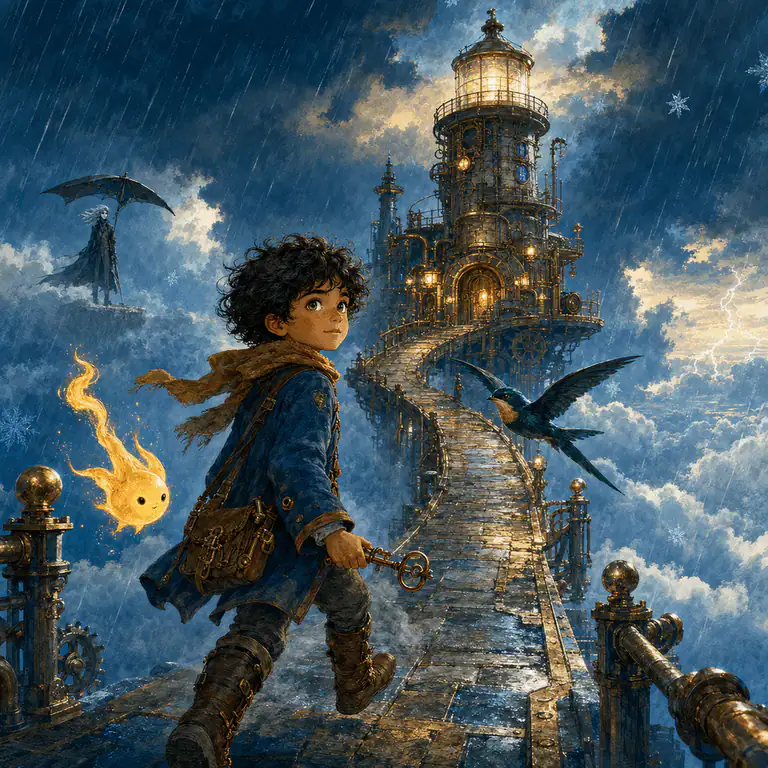
Aeravi and the Lighthouse Above the Rain
A 96-page sky adventure in two connected parts, where Aeravi must repair broken weather and confront the Heart of Stillness.
Explore the book →
Marty TalefoxBooks by theme · Accepting help
Children are often praised for doing things independently, but stories can show that asking for help is a skill rather than a failure. These books make support part of the adventure: characters notice when a task is too large, find the words to ask, and still keep their own agency.
Stories to explore
This collection focuses on recognising limits, asking clearly, accepting support, and helping without taking over. The books approach the idea through different characters and situations, so children can compare choices rather than receive one fixed lesson.

A 96-page sky adventure in two connected parts, where Aeravi must repair broken weather and confront the Heart of Stillness.
Explore the book →
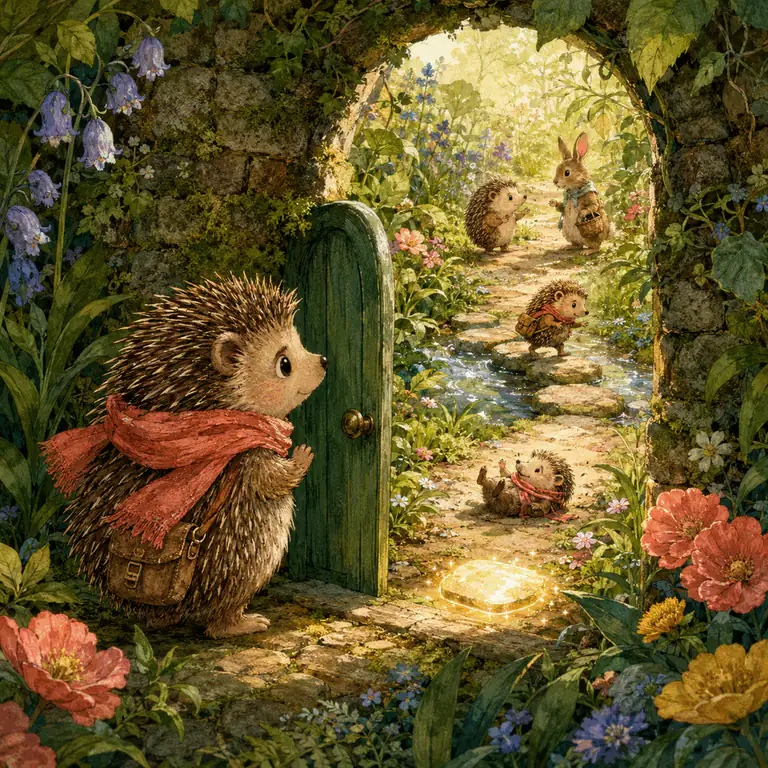
Behind a tiny garden door, courage grows one gentle step at a time.
Explore the book →
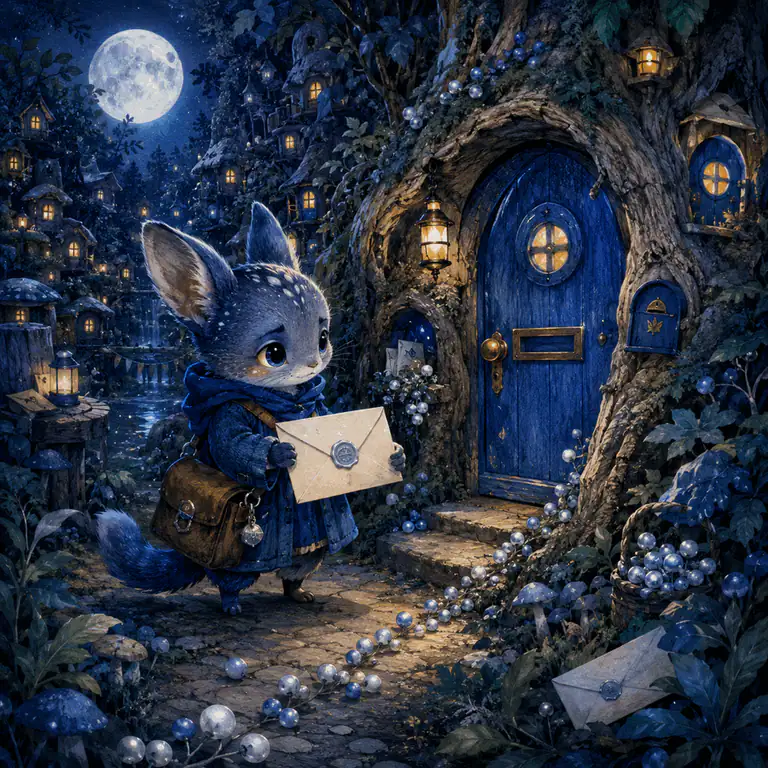
Letters, little mysteries, and a shy night courier who discovers that every voice deserves to be heard.
Explore the book →
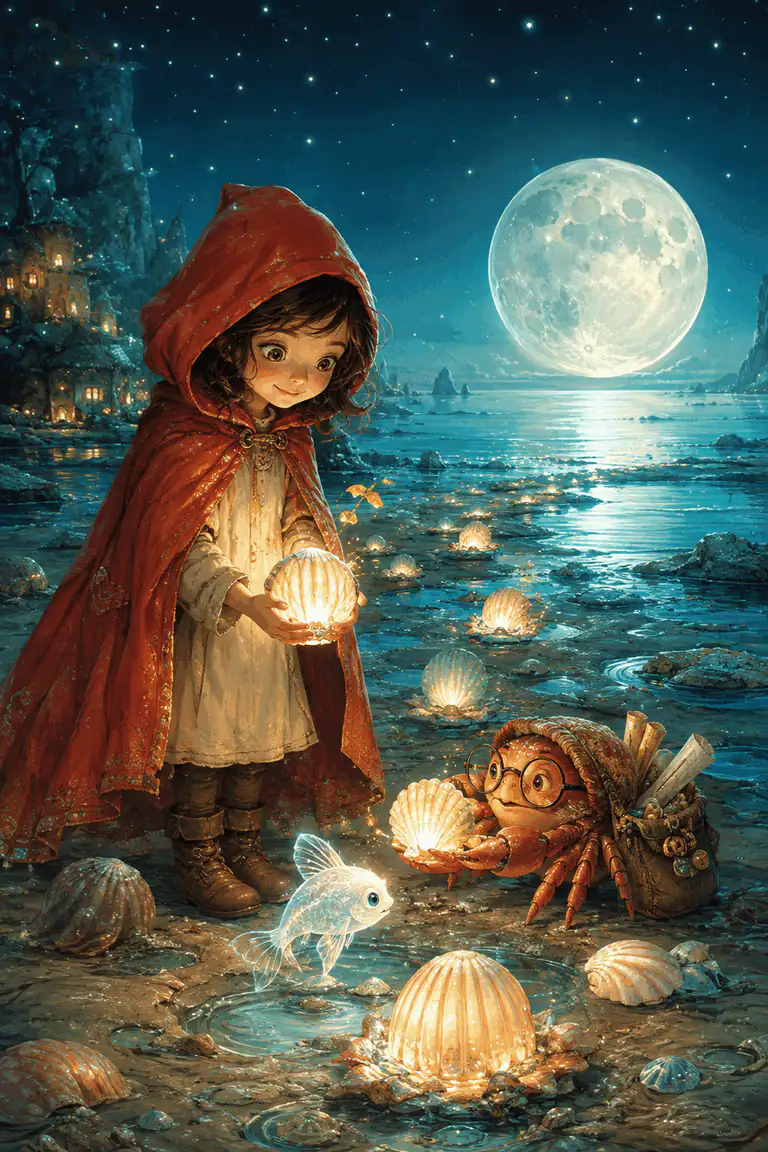
When the sea grows still, Coraquill helps a forgotten tide find the way back to the shore.
Explore the book →A gentle guide for grown-ups
Picture books make an abstract idea easier to discuss because children can watch it unfold through a character, a setting, and visible consequences. In this collection, the focus is on recognising limits, asking clearly, accepting support, and helping without taking over.
There is no need to explain the theme before reading. A useful approach is to stay with what the character notices and does; during or after the story, notice who offers help, whether the help is actually useful, and how the character stays involved in solving the problem.
Begin with what happened and why it mattered before naming the theme.
Faces, distance, colour, objects, and repeated details can add evidence that the words do not state directly.
Invite more than one interpretation and let the child disagree with a character’s choice.
For families
Stories let children explore accepting help at a safe distance, through characters and consequences rather than a lecture.
Usually not. It is often more useful to notice choices, feelings, and changes together and let the child form an interpretation.
Yes. Younger children may follow the pictures and central action, while older children can discuss motives, alternatives, and consequences in more depth.
This collection includes Aeravi and the Lighthouse Above the Rain, Jorali and the Door of Small Braveries, Velumi and the Lumerra Post Office, Coraquill and the Tide That Forgot to Return.
From the journal
Why courage in stories can be small, honest and possible.
Read the article →