Everyday courageResilienceNew experiences
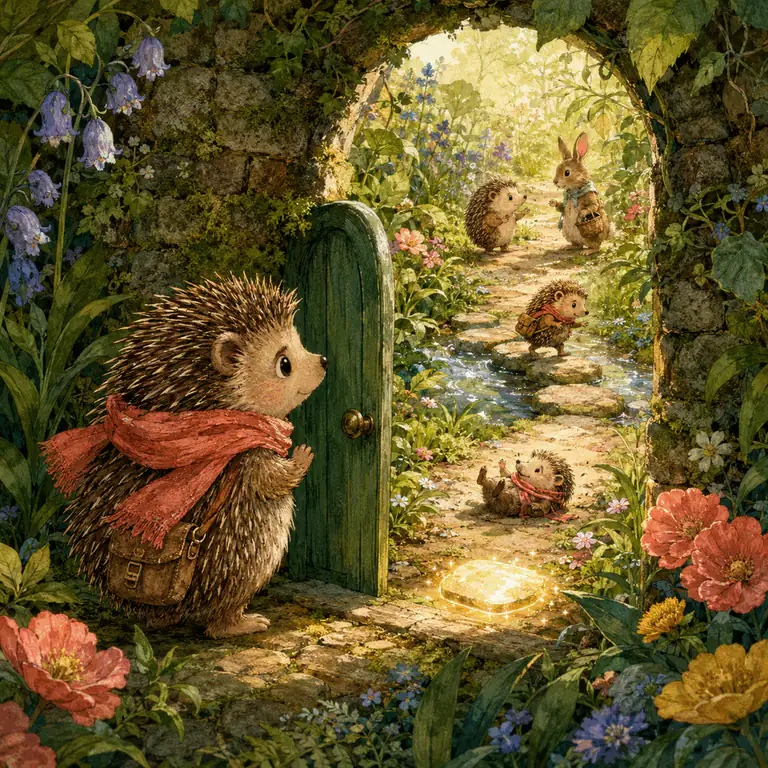
Jorali and the Door of Small Braveries
Behind a tiny garden door, courage grows one gentle step at a time.
Explore Jorali and the Door of Small Braveries → Marty TalefoxStory Worlds
Books by age · 5 years
Five-year-olds can often hold a longer story in mind, compare a character’s choices, and notice that two feelings can exist at once. These illustrated Marty Talefox stories offer richer problems to think about while keeping the warmth, visual clarity, and read-aloud rhythm of a picture book.
Stories to explore
These selections give five-year-olds more to connect: a fear can coexist with courage, an imperfect plan can lead somewhere useful, and a quiet voice can matter without becoming the loudest in the room.
Behind a tiny garden door, courage grows one gentle step at a time.
Explore Jorali and the Door of Small Braveries →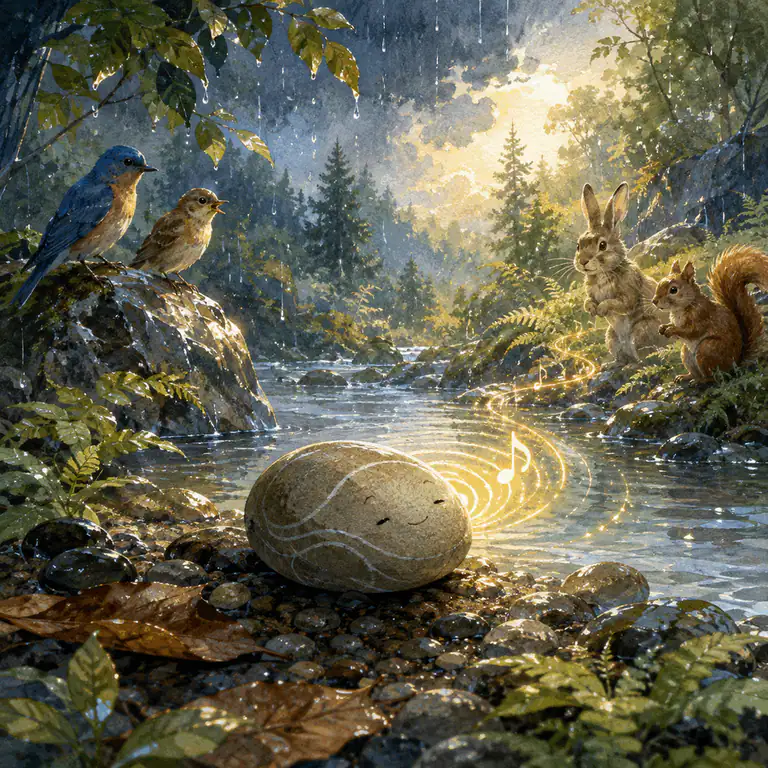
A quiet pebble finds its voice—and learns that the smallest sound can bring a whole forest together.
Explore Rillu Who Learned to Sing →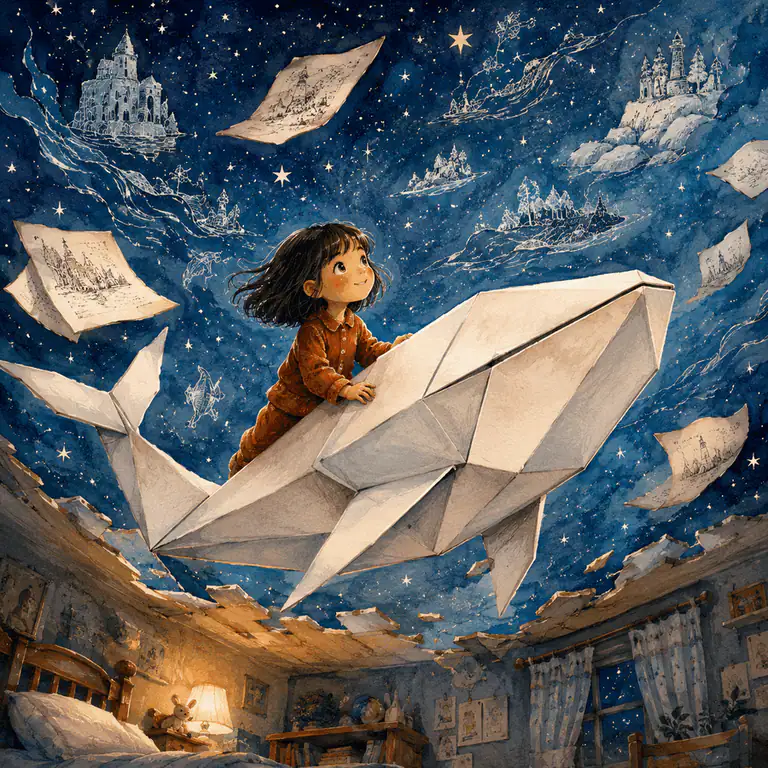
One folded whale carries Ovellia into a sky made of stories, stars, and possibility.
Explore Ovellia and the Paper Whale →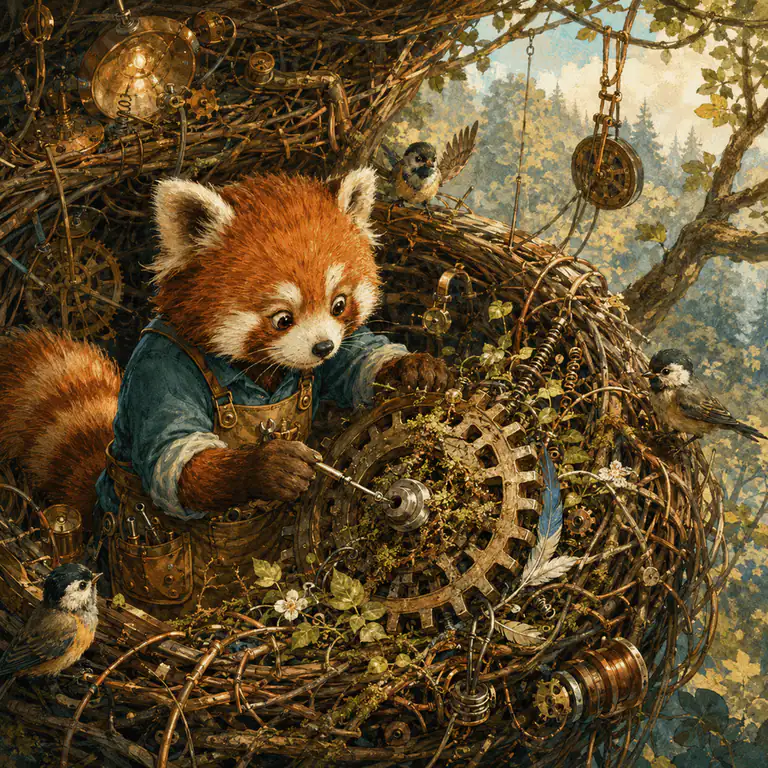
A curious red panda learns that even perfect little machines need patience, care, and imagination.
Explore Norvelli and the Clockwork Nest →A gentle guide for grown-ups
Many five-year-olds begin to enjoy discussing motives: not only what a character did, but why. That makes picture books a useful space for talking about uncertainty, confidence, patience, and different ways to solve a problem.
A book can also become a bridge toward independent reading without needing to become an early reader. Following repeated phrases, noticing visual clues, and retelling a favourite scene all support the skills that later reading depends on.
Ask what the character wanted, worried about, or misunderstood. There can be more than one good answer.
After a favourite story, let the child tell one scene back in their own words or through the pictures.
Not every story needs a final explanation. Wondering together can be part of the pleasure of reading.
For families
No. Picture books can carry sophisticated language, visual storytelling, humour, emotional nuance, and complex ideas even when an adult is still doing most of the reading aloud.
Not necessarily. Independent reading develops at different rates. Shared reading still offers vocabulary, story structure, conversation, and access to books that are richer than a child can decode alone.
Friendship, confidence, mistakes, change, curiosity, fairness, courage, creativity, and problem-solving can all work well when they are carried by an engaging story rather than a lecture.
Familiarity helps children predict language, notice details, remember sequence, and revisit emotions safely. Re-reading is a normal and useful part of learning from stories.
From the journal
Why repetition can support memory, language, prediction, emotional safety, and deeper reading.
Read the article →