
Self-expressionBelongingConfidence
Rillu Who Learned to Sing
A quiet pebble finds its voice—and learns that the smallest sound can bring a whole forest together.
Explore Rillu Who Learned to Sing → Marty TalefoxStory Worlds
Books by theme · Confidence
Confidence does not always look loud. For some children it is asking a question, sharing an idea, trying after a mistake, or trusting that a quiet voice still belongs in the room. These Marty Talefox picture books explore self-expression, belonging, and growing confidence without turning every character into the boldest one.
Stories to explore
These stories value quietness, imagination, listening, and small acts of participation. The goal is not to transform a shy character into an extrovert, but to help them discover that their ideas and choices can matter.
A quiet pebble finds its voice—and learns that the smallest sound can bring a whole forest together.
Explore Rillu Who Learned to Sing →
Letters, little mysteries, and a shy night courier who discovers that every voice deserves to be heard.
Explore Velumi and the Lumerra Post Office →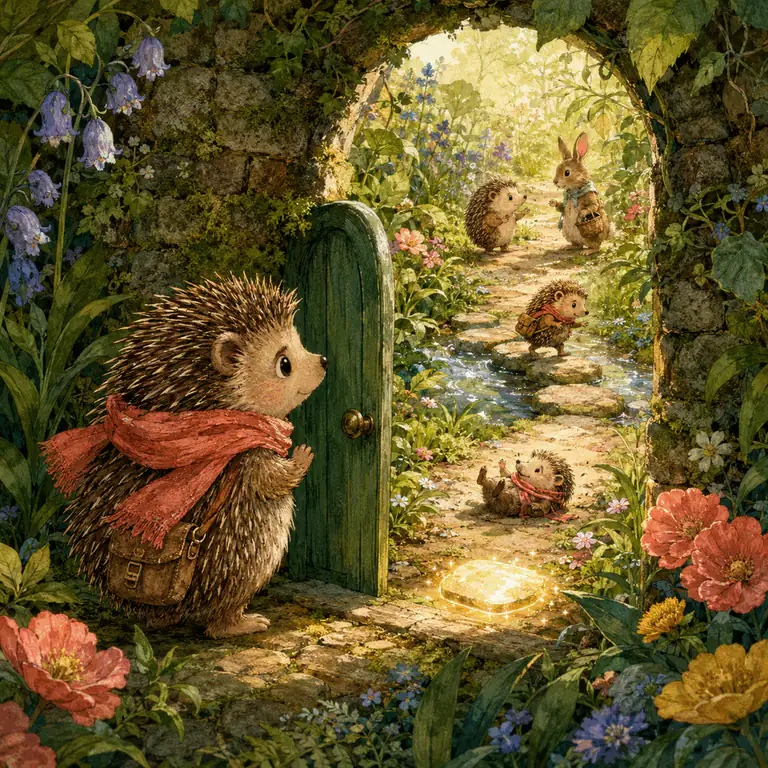
Behind a tiny garden door, courage grows one gentle step at a time.
Explore Jorali and the Door of Small Braveries →
One folded whale carries Ovellia into a sky made of stories, stars, and possibility.
Explore Ovellia and the Paper Whale →A gentle guide for grown-ups
Children often notice when adults expect a story to teach them something. A gentler approach is to stay with the character: what made the moment difficult, what helped, and what changed after the character tried.
Books can also widen the definition of confidence. Speaking in front of a group is one form, but so are asking for help, starting a drawing, singing one small note, or telling someone what you need.
Notice the action—asking, trying, sharing, returning—rather than describing the child or character as simply ‘confident.’
A quiet child does not need to become loud to have agency. Look for stories where listening and thoughtfulness also matter.
A phrase such as ‘one small note’ or ‘one small bravery’ can become a gentle family shorthand when a new situation appears.
For families
They can offer relatable characters, language for difficult moments, and examples of manageable next steps. The goal should be support, not treating shyness as something that must be fixed.
Useful stories can support self-expression, persistence, belonging, asking for help, trying something new, and trusting one’s own ideas—not only public performance.
They overlap but are not identical. Confidence often refers to feeling capable in a situation, while self-esteem is a broader sense of personal worth. Young children can explore both through stories about belonging and agency.
Keep the conversation anchored in the character and in small actions. Avoid turning the story into a comparison with what the child should be doing.
From the journal
How small attempts, self-expression, belonging and asking for help can build confidence without treating quietness as a problem.
Read the article →More from this topic