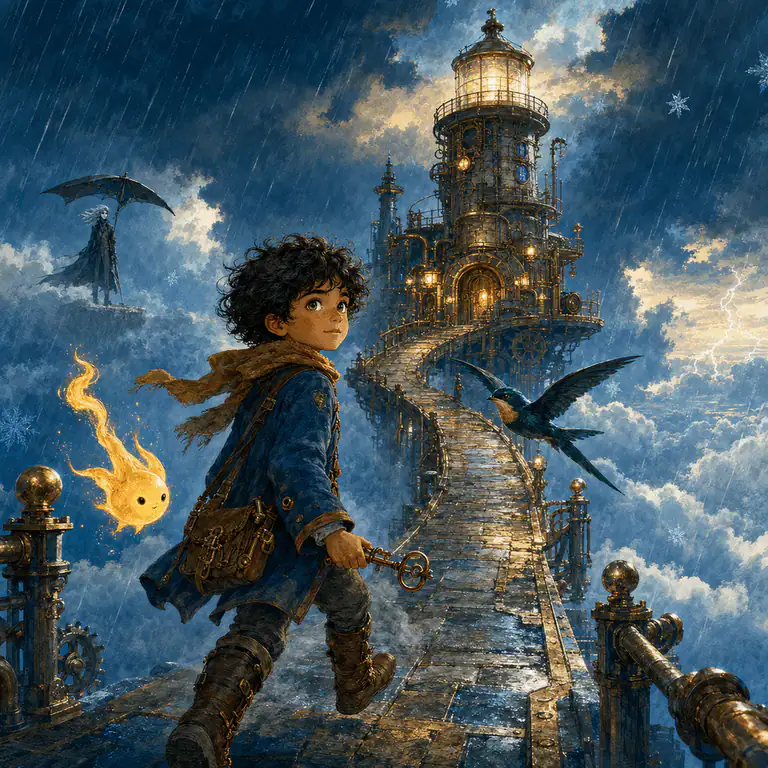
Aeravi and the Lighthouse Above the Rain
A 96-page sky adventure in two connected parts, where Aeravi must repair broken weather and confront the Heart of Stillness.
Explore the book →
Marty TalefoxBooks by theme · Nature & weather
Weather and nature can be more than scenery. In these storyworlds, rain, clouds, tides, sound, and changing skies shape the problem itself, giving children a way to notice patterns, cycles, dependence, and the fact that a healthy world often needs more than one kind of condition.
Stories to explore
This collection focuses on weather, seasons, water, natural rhythms, observation, and relationships between living things and their surroundings. The books approach the idea through different characters and situations, so children can compare choices rather than receive one fixed lesson.

A 96-page sky adventure in two connected parts, where Aeravi must repair broken weather and confront the Heart of Stillness.
Explore the book →
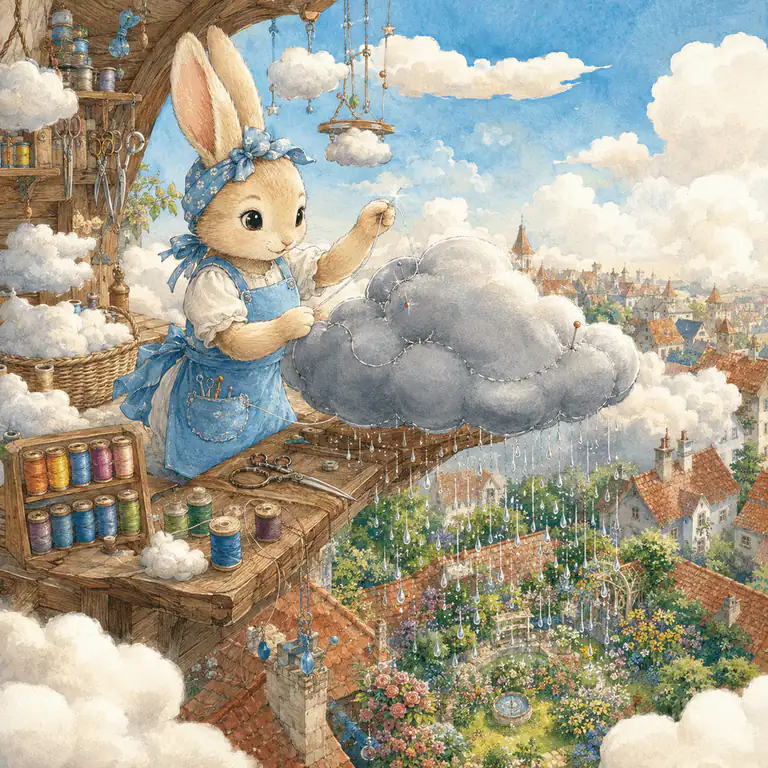
Pellumi stitches clouds for every kind of day—and finds beauty in rain as well as sunshine.
Explore the book →
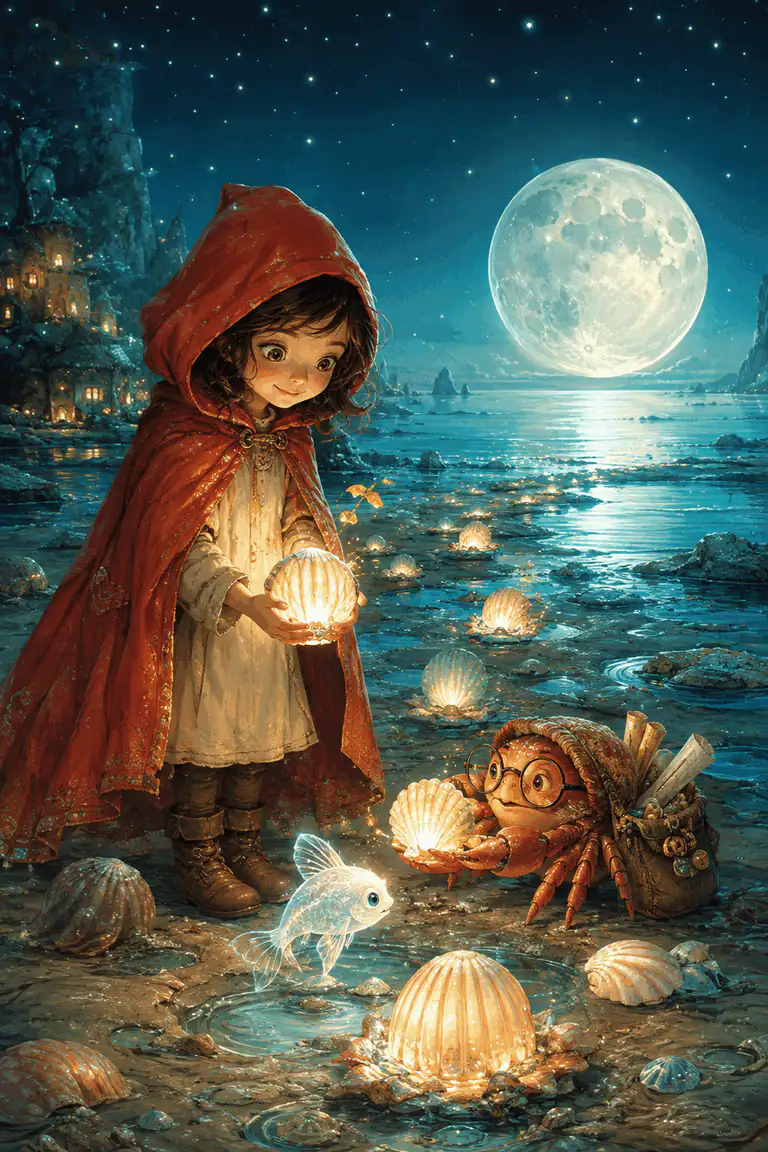
When the sea grows still, Coraquill helps a forgotten tide find the way back to the shore.
Explore the book →
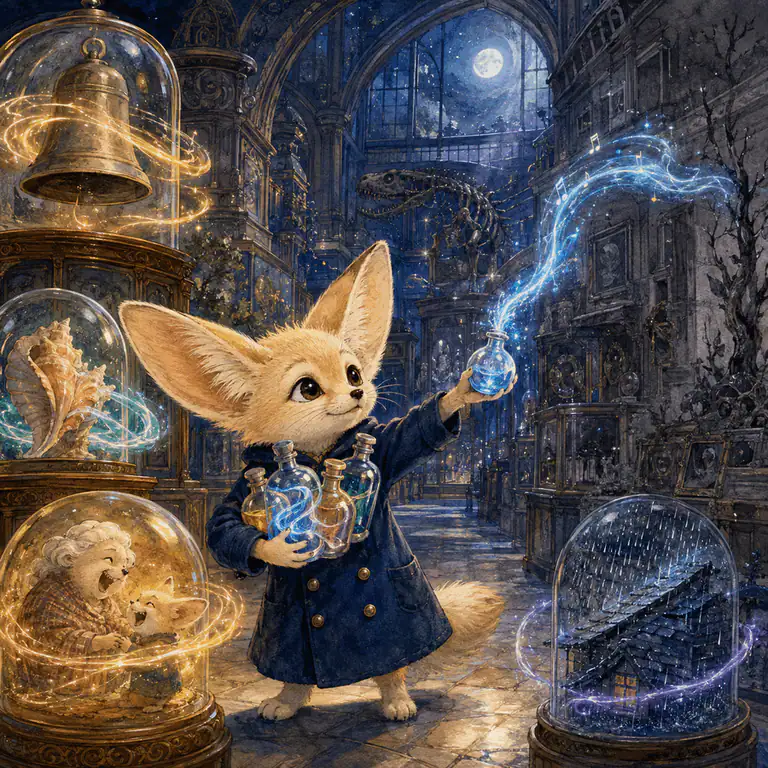
Sovari gathers forgotten bells, waves, whispers, and laughter—and helps the world hear them again.
Explore the book →A gentle guide for grown-ups
Picture books make an abstract idea easier to discuss because children can watch it unfold through a character, a setting, and visible consequences. In this collection, the focus is on weather, seasons, water, natural rhythms, observation, and relationships between living things and their surroundings.
There is no need to explain the theme before reading. A useful approach is to stay with what the character notices and does; during or after the story, ask what would change in the story if one natural element disappeared, arrived at the wrong time, or behaved differently.
Begin with what happened and why it mattered before naming the theme.
Faces, distance, colour, objects, and repeated details can add evidence that the words do not state directly.
Invite more than one interpretation and let the child disagree with a character’s choice.
For families
Stories let children explore nature & weather at a safe distance, through characters and consequences rather than a lecture.
Usually not. It is often more useful to notice choices, feelings, and changes together and let the child form an interpretation.
Yes. Younger children may follow the pictures and central action, while older children can discuss motives, alternatives, and consequences in more depth.
This collection includes Aeravi and the Lighthouse Above the Rain, Pellumi and the Cloud Tailor, Coraquill and the Tide That Forgot to Return, Sovari and the Archive of Vanishing Sounds.
From the journal
Simple open questions that keep a shared reading experience alive after the last page.
Read the article →