ImaginationCuriosityStorytelling
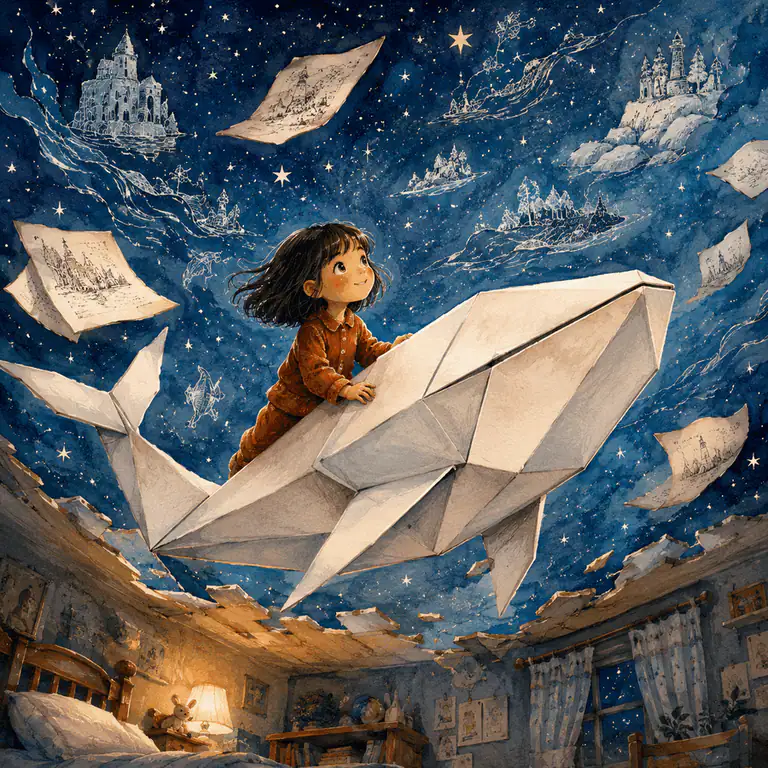
Ovellia and the Paper Whale
One folded whale carries Ovellia into a sky made of stories, stars, and possibility.
Explore Ovellia and the Paper Whale → Marty TalefoxStory Worlds
Books by theme · Curiosity & wonder
Curiosity begins with a question, but good stories let it become a way of looking: noticing a strange detail, testing an idea, following an unexpected sound, or wondering whether an ordinary object could behave differently. These books reward questions that do not have one immediate answer.
Stories to explore
This collection focuses on questions, close observation, wonder, and following an idea beyond the obvious explanation. The books approach the idea through different characters and situations, so children can compare choices rather than receive one fixed lesson.
One folded whale carries Ovellia into a sky made of stories, stars, and possibility.
Explore Ovellia and the Paper Whale →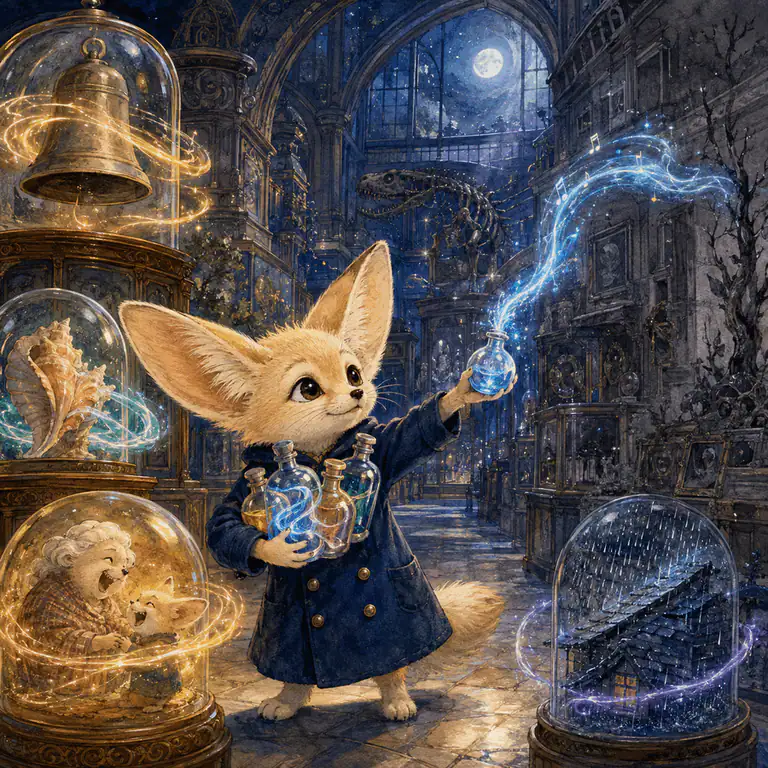
Sovari gathers forgotten bells, waves, whispers, and laughter—and helps the world hear them again.
Explore Sovari and the Archive of Vanishing Sounds →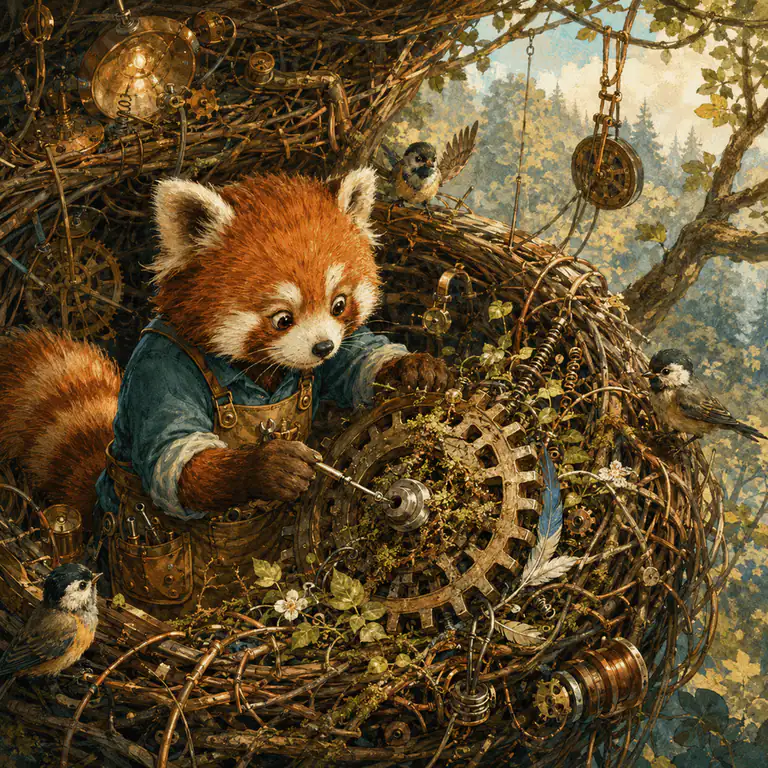
A curious red panda learns that even perfect little machines need patience, care, and imagination.
Explore Norvelli and the Clockwork Nest →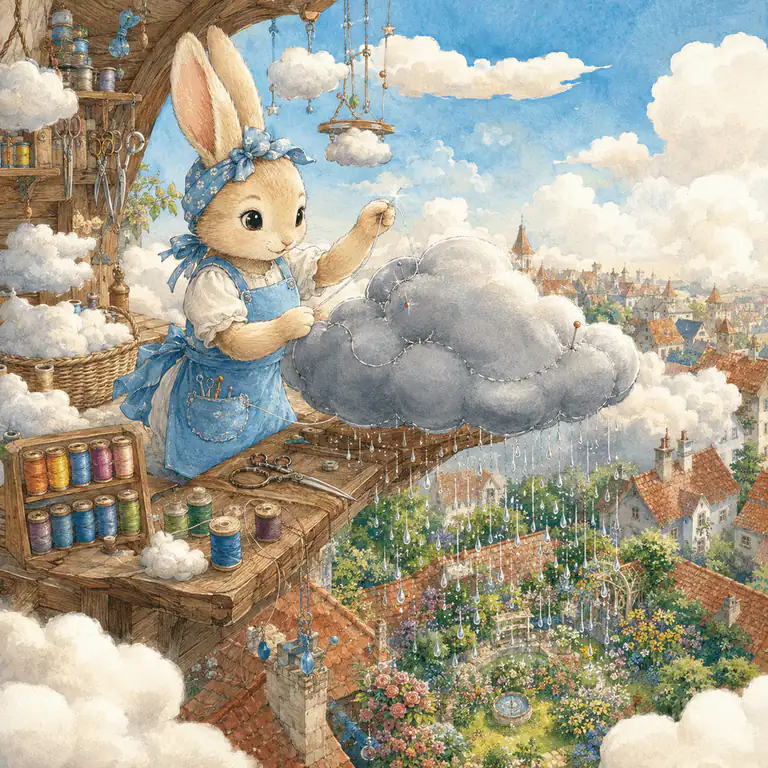
Pellumi stitches clouds for every kind of day—and finds beauty in rain as well as sunshine.
Explore Pellumi and the Cloud Tailor →A gentle guide for grown-ups
Curiosity stories are strongest when a question changes what the character notices. Instead of praising curiosity in the abstract, follow the sequence: something seems odd, the character looks closer, gathers clues, tests an idea, and perhaps discovers a new question. The pleasure lies in attention as much as in the final answer.
Adults do not need to resolve every mystery immediately. Leaving a page, object, or character partly unexplained can invite children to form hypotheses and revise them later. A story can therefore model uncertainty as something interesting and workable rather than something that must be closed as quickly as possible.
When the child asks about a mysterious detail, first ask what clues they can find before explaining it.
Return to an earlier prediction and notice what new evidence made another explanation more convincing.
At the end, ask what the child would still like to know rather than checking only what was learned.
For families
It offers details worth investigating, allows predictions, and gives children enough evidence to build ideas without explaining every interesting thing immediately.
Yes. Open questions can support inference, imagination, and comfort with uncertainty, especially when the central story still reaches a satisfying point.
Choose some to answer, some to investigate from the pictures, and some to keep as shared questions for later. The conversation does not need to stop the story every time.
This collection includes Ovellia and the Paper Whale, Sovari and the Archive of Vanishing Sounds, Norvelli and the Clockwork Nest, Pellumi and the Cloud Tailor.
From the journal
How unusual fictional worlds encourage questions, prediction, flexible thinking and the habit of looking for how things might work.
Read the article →More from this topic