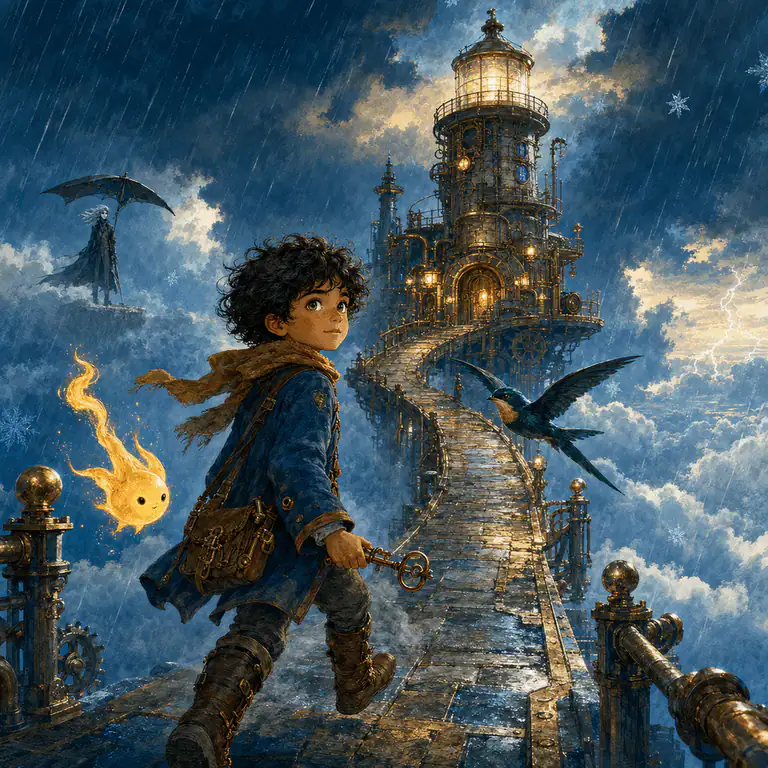
Tavi and the Lighthouse Above the Rain
A 96-page sky adventure in two connected parts, where Tavi must repair broken weather and confront the Heart of Stillness.
Explore the book →
Marty TalefoxBooks by age · 7 years
Seven-year-olds do not outgrow picture books when they start reading chapter books. A strong illustrated story can compress big ideas into a form that invites close looking, inference, humour, and conversation. These Marty Talefox selections work especially well for children ready to think about responsibility, memory, gratitude, change, and what another character may be experiencing.
Stories to explore
These stories invite older young readers to connect details across pages, consider motives, and notice how a character’s understanding changes over time.

A 96-page sky adventure in two connected parts, where Tavi must repair broken weather and confront the Heart of Stillness.
Explore the book →
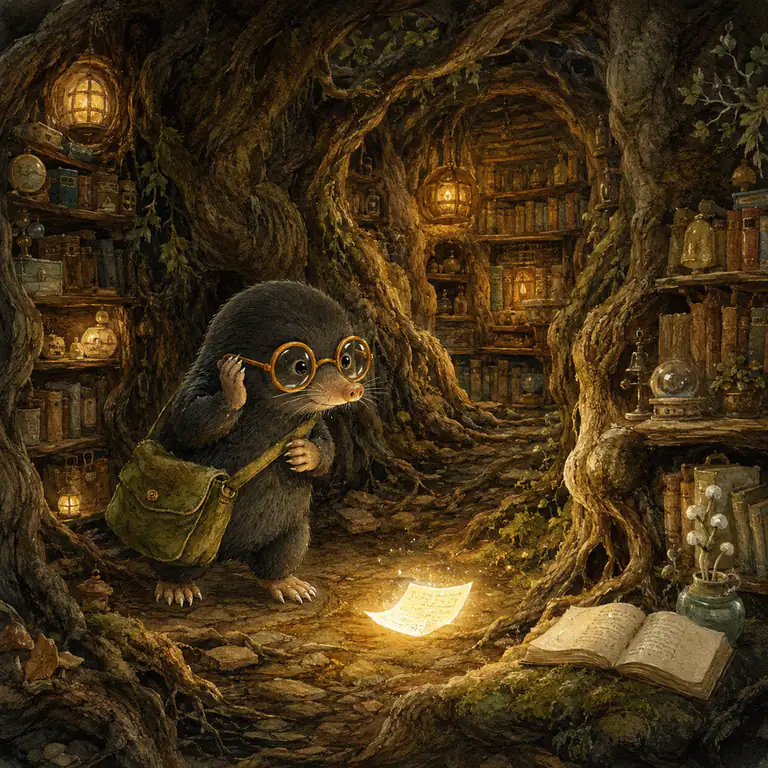
Below an ancient tree, forgotten stories wait for a careful listener.
Explore the book →
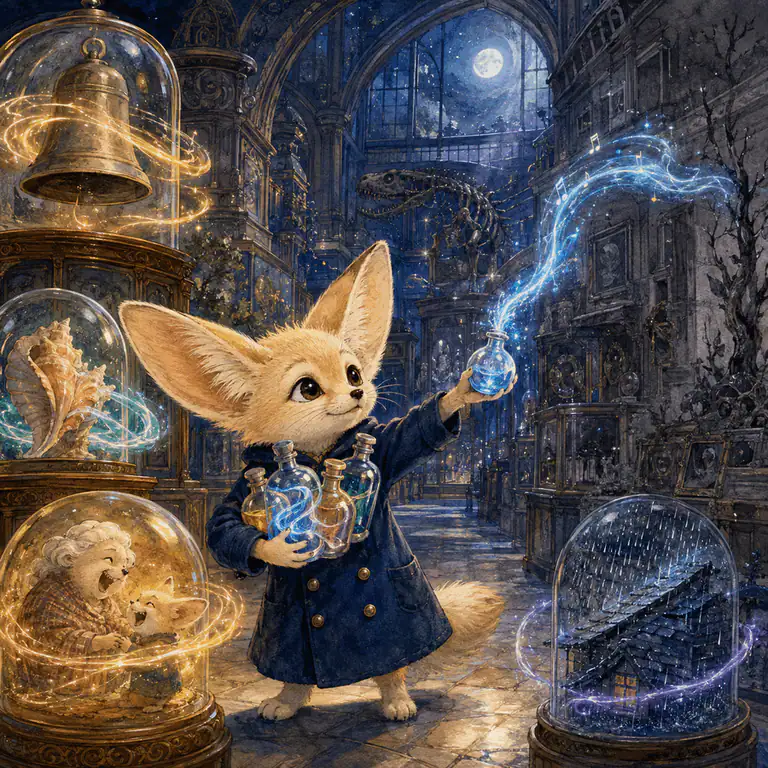
Sol gathers forgotten bells, waves, whispers, and laughter—and helps the world hear them again.
Explore the book →
A gentle illustrated adventure about the little beginnings of a day that are too precious to lose.
Explore the book →A gentle guide for grown-ups
Independent reading is not a reason to stop reading aloud. Hearing an adult read fluent, expressive language lets a seven-year-old encounter vocabulary and narrative structures above their decoding level.
Illustrations also create a second narrative channel. A child can compare what the words say with what the image suggests, making picture books especially good for inference and discussion.
Ask whether the picture adds something the words do not tell us directly.
Invite the child to choose which scene deserves a second look or a longer conversation.
Return to an early page and notice what feels different after knowing the ending.
For families
Yes. Picture books support visual literacy, inference, vocabulary, discussion, and enjoyment even when children also read early chapter books.
Absolutely. A short text can still contain ambiguity, metaphor, sophisticated vocabulary, or visual information that requires careful interpretation.
Yes. It allows children to experience language and stories beyond their independent reading level while preserving reading as a shared experience.
Questions about motives, surprising details, alternative choices, or what changed in a character tend to work better than recall questions.
From the journal
Why returning to a familiar story can deepen interpretation, memory, and attention to visual detail.
Read the article →