PatienceCreativityProblem-solving
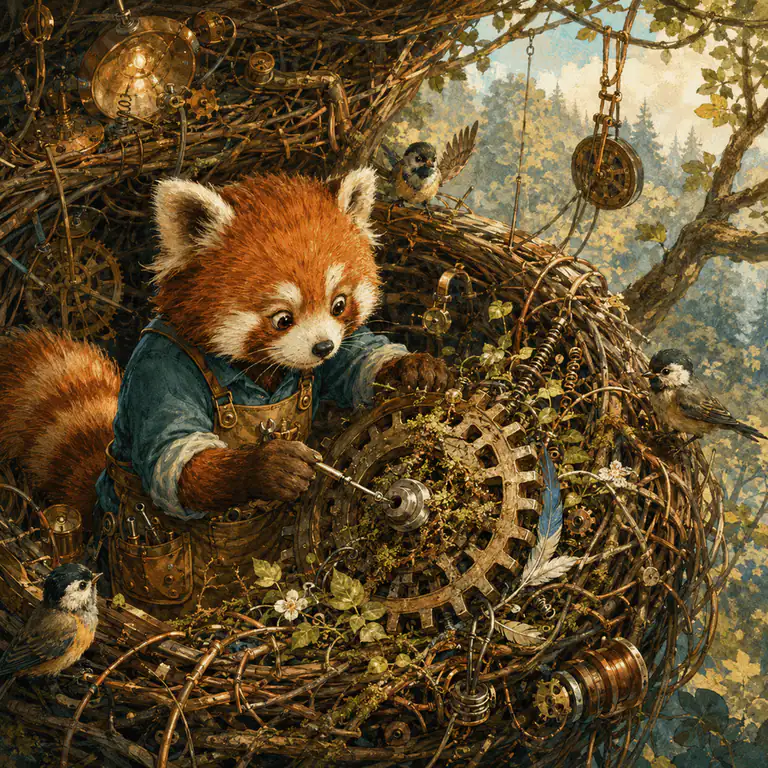
Norvelli and the Clockwork Nest
A curious red panda learns that even perfect little machines need patience, care, and imagination.
Explore Norvelli and the Clockwork Nest → Marty TalefoxStory Worlds
Books by theme · Problem-solving
A satisfying problem-solving story does not give the character a perfect first idea. These books make room for testing, noticing what failed, changing a plan, using imagination, and sometimes discovering that the original goal needs to change too.
Stories to explore
This collection focuses on trying ideas, learning from feedback, flexible thinking, and choosing a next step. The books approach the idea through different characters and situations, so children can compare choices rather than receive one fixed lesson.
A curious red panda learns that even perfect little machines need patience, care, and imagination.
Explore Norvelli and the Clockwork Nest →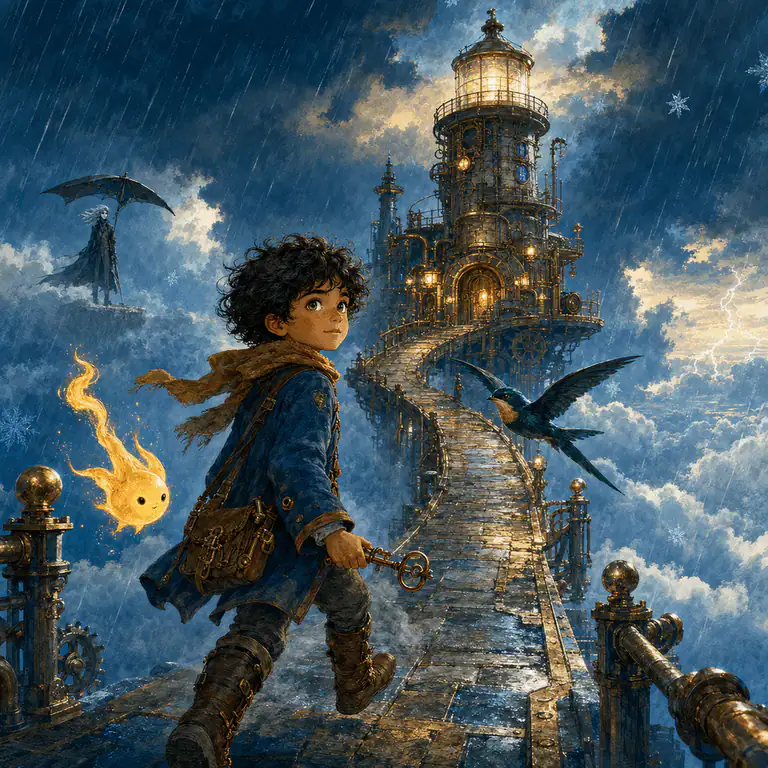
A 96-page sky adventure in two connected parts, where Aeravi must repair broken weather and confront the Heart of Stillness.
Explore Aeravi and the Lighthouse Above the Rain →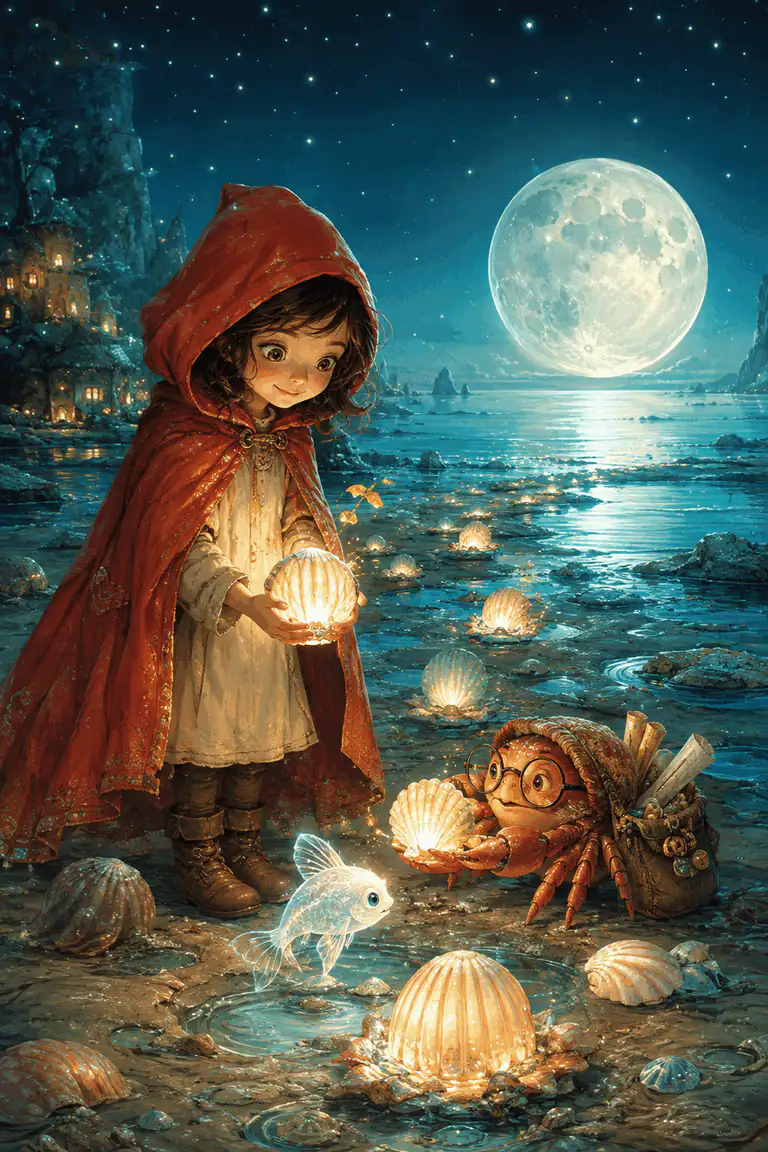
When the sea grows still, Coraquill helps a forgotten tide find the way back to the shore.
Explore Coraquill and the Tide That Forgot to Return →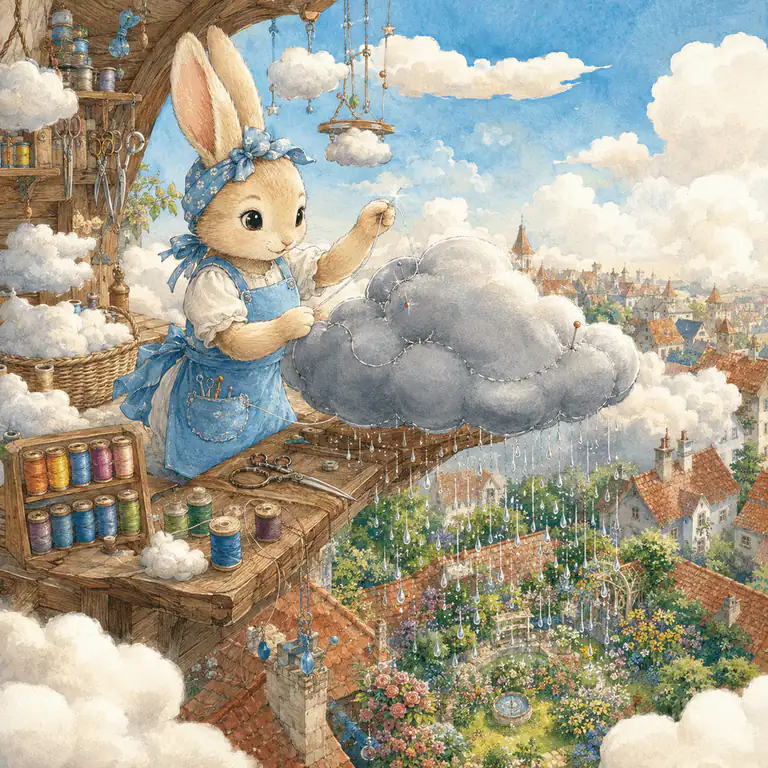
Pellumi stitches clouds for every kind of day—and finds beauty in rain as well as sunshine.
Explore Pellumi and the Cloud Tailor →A gentle guide for grown-ups
Problem-solving stories are most useful when the first idea is not perfect. Follow what each attempt teaches the character: a material behaves differently than expected, a clue changes the goal, or another character sees something that was missed. The interesting question becomes not ‘Did it work?’ but ‘What did they learn from trying?’
Children can also notice that flexible thinking sometimes means changing the problem itself. A character may discover that the original goal was incomplete, impossible, or not what mattered most. This keeps problem-solving from becoming a race toward one correct answer and makes room for creativity, revision, and collaboration.
After an attempt fails, ask what the character knows now that they did not know before.
Look at what changed between the first idea and the next one instead of judging one as simply wrong.
Ask whether the character is still solving the same problem by the end of the story.
For families
It shows a process: trying, observing results, adjusting, combining ideas, and sometimes redefining the goal rather than producing a perfect solution immediately.
Yes. A mistake becomes useful when the story shows what new information it reveals and how that information changes the next attempt.
Ask open questions such as ‘What changed after that try?’ or ‘What else could they use?’ and accept more than one plausible idea.
This collection includes Norvelli and the Clockwork Nest, Aeravi and the Lighthouse Above the Rain, Coraquill and the Tide That Forgot to Return, Pellumi and the Cloud Tailor.
From the journal
Simple open questions that keep a shared reading experience alive after the last page.
Read the article →